15 years and 9 graduations later, our commitment to leadership development remains firm
Homepage » News » 15 years and 9 graduations later, our commitment to leadership development remains firm
Share:
The 21st century is marked by global disruptions arising from rapid technological advancements, health pandemics, persistent inflation, geopolitical tensions, and climate shocks. At the dawn of this century, the governments of Tanzania and Finland launched the Helsinki Process on Globalisation and Democracy in response to the need for innovative solutions to the dilemmas of global governance. These new solutions were sought through an open and inclusive dialogue amongst the major stakeholders.
The forum concluded with a commitment to establish the Dar es Salaam Institute for Sustainable Development to “enhance the capacity of African governments, the private sector organisations, and the civil society to participate in and benefit from the globalisation in the areas of trade, environment and sustainable development.”
The Institute was formally established through a Presidential Instrument that came into operation on 1 July 2010,[1] and was later renamed to the Institute of African Leadership for Sustainable Development (UONGOZI Institute).
A decade and a half later, leadership development remains at the heart of the Institute’s activities. Our core focus acknowledges that effective leadership, both globally and in Africa, is a prerequisite for achieving sustainable development. We constantly strive to enhance the knowledge, competencies and skills of African leaders to design policies and programmes that are tailored to their specific developmental contexts, while considering regional and global implications. We apply a holistic and mutually reinforcing approach to capacity development that recognises that leadership competencies are developed through a continuous, lifelong learning process.
As of December 2025, we had delivered over 500 executive education programmes to 22,000 African leaders. The long-term executive education programmes, Postgraduate Diploma in Leadership (PGD), Certificate in Leadership (CiL), Women’s Leadership Programme (WLP), and Emerging Leaders Programme (ELP) had yielded over 1,000 graduates. Over 100 policy forums had been organised with an attendance of 20,000 leaders from Africa and internationally, and 80 research projects had been completed, including three autobiographies of former Tanzanian presidents (Ali Hassan Mwinyi and Benjamin William Mkapa) and prime minister (Edward Moringe Sokoine). Advisory services to public institutions had reached 50 commissions, and 100 interviews had been conducted with prominent leaders and experts.
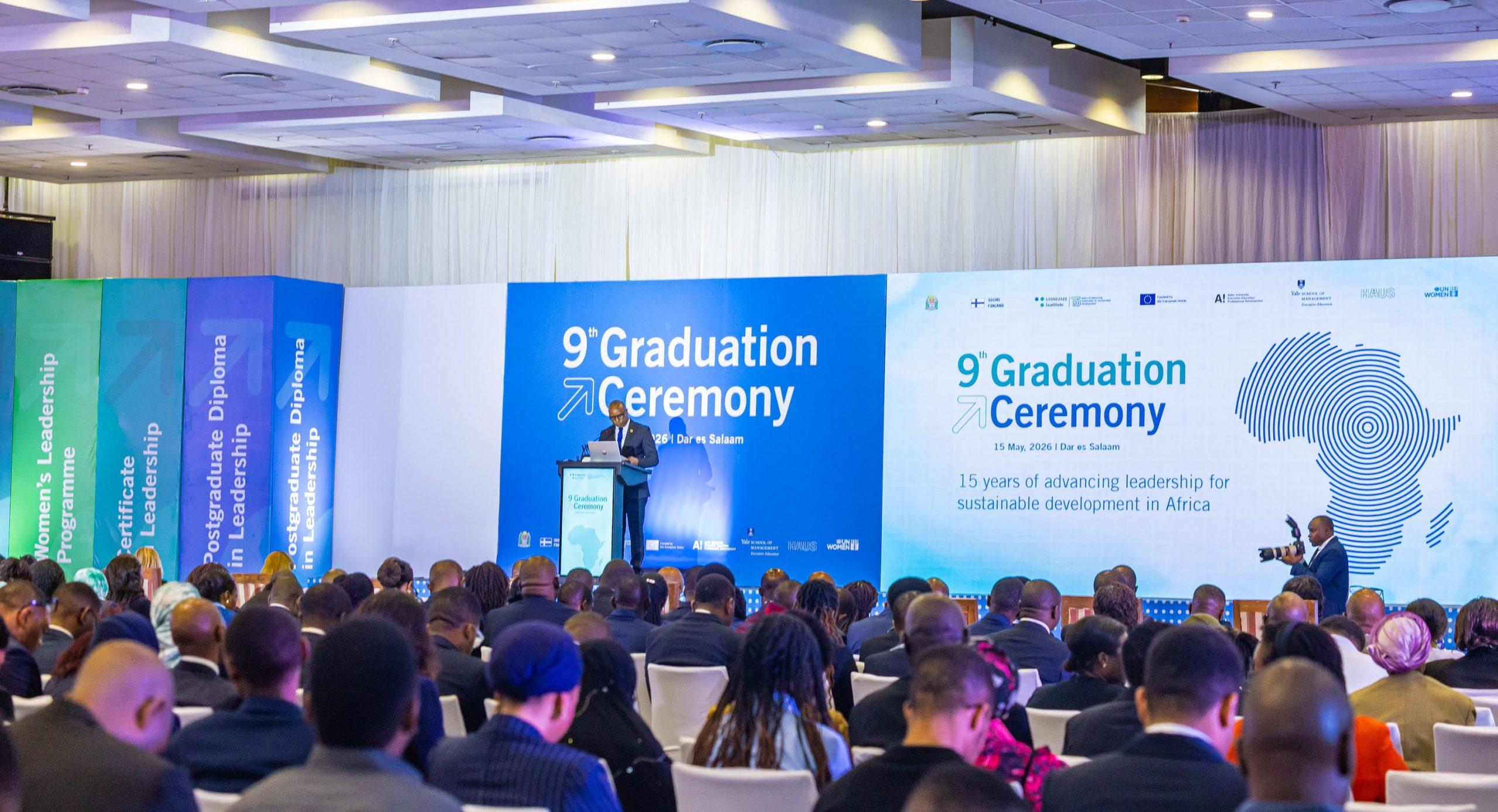
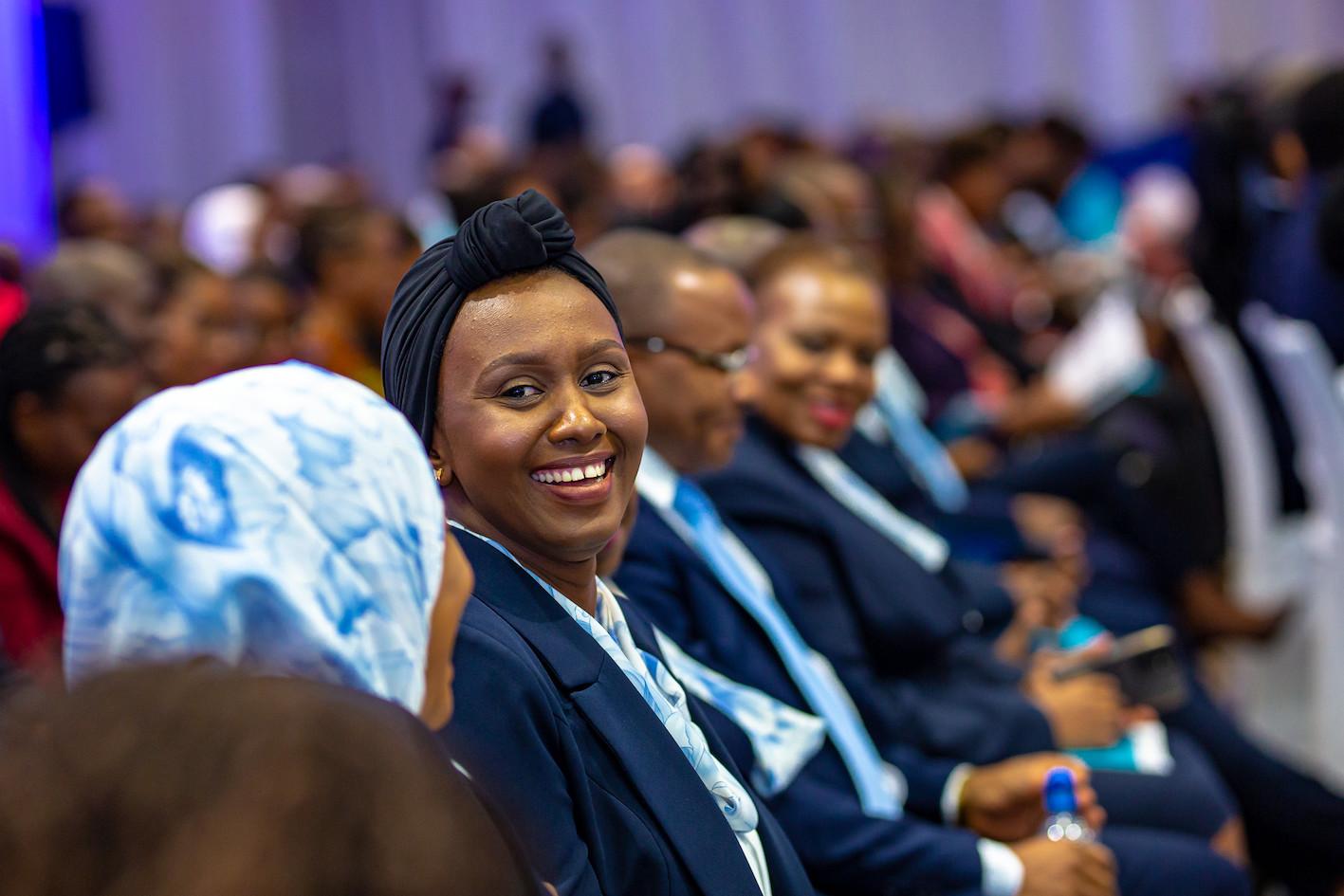
On 15 May 2026, we held our ninth graduation ceremony under the theme “15 years of advancing leadership for sustainable development in Africa”. The event celebrated the accomplishments of those who have completed our long-term executive education programmes while highlighting our history, achievements and aspirations.
The guest of honour was Hon. Ridhiwani Kikwete (MP), Minister of State, President’s Office – Public Service Management and Good Governance. The keynote address was delivered by H.E. Dr. Elsie Kanza, Ambassador of Tanzania to the United States.
During his speech, Minister Kikwete commended the Institute for its achievements over the past fifteen years, saying:
“Your success shows your ability to deliver on the mission and vision, especially in times of rapid, disruptive change.”
Turning to the graduates, the Minister encouraged them to stay receptive, curious, and permeable. He added:
“Embrace every challenge as an opportunity to innovate and design bold solutions. By doing so, you will emerge as transformational leaders who can inspire long-lasting change in Tanzania and the wider continent.”
Minister Kikwete during his address.
Ambassador Kanza challenged the graduating class to put their new knowledge into action:
“Keep in mind that graduating from such a respected Institute comes with high expectations. Thus, the onus, now, is on you to turn those lessons into tangible impact at your workplace.”
Ambassador Kanza delivers keynote speech.
Delivering a vote of thanks, Amb. Ombeni Sefue, Chairperson of UONGOZI Institute’s Board of Directors, expressed appreciation to Minister Kikwete, Ambassador Kanza and other distinguished guests for taking the time to attend the event. He congratulated the graduates for their success and encouraged them to continue engaging with the Institute:
“You will note that I have not used the word ‘goodbye’ at all. There is a reason for that. We don’t have that word in the UONGOZI Institute vocabulary. We are so confident in the enduring relationships we build with those who pass through our hands that we believe you would not want to disconnect. Our hands remain outstretched, you are always welcome, remain engaged with what is happening, be our good ambassadors out there and don’t forget to be active participants in the alumni network.”
Amb. Sefue gives a vote of thanks.
The four long-term executive education programmes aim to develop leadership competencies in personal leadership, people leadership and organisational leadership. They are dedicated for leaders, from all sectors, who want to propel their professional development without putting their careers on hold. PGD and CiL are delivered in collaboration with Aalto University Executive Education and Professional Development (Finland), while ELP is run through the partnership with HAUS Finnish Institute of Public Administration (Finland). The three programmes are implemented with support from the governments of Tanzania and Finland. WLP is delivered in collaboration with Yale School of Management (USA) and receives support from the two governments as well as the European Union.
The award ceremony.
The graduation ceremony also featured the launch of our fourth strategic plan, covering 2026/27 – 2030/31. This strategy seeks not only to advance the achievements of the first three plans but also to set new priorities that respond to emerging national, regional and global challenges. It emphasises fostering strategic innovative programmes, widening regional reach through strategic partnerships, advancing thought leadership, strengthening institutional capacity, and ensuring financial sustainability. It is aligned with national, regional and global agendas, including the Tanzania Development Vision 2050 (Dira 2050), the African Union’s Agenda 2063, and the United Nations Sustainable Development Goals (SDGs). Notable themes to shape its success include innovation, leadership development, inclusivity, green growth, and economic transformation.
The launch of strategic plan 2026/27 – 2030/31.
As we prepare to put this strategy into action, we invite stakeholders with mutual interest to join us in our pursuit of advancing leadership for sustainable development in Africa.