The global shift towards low-carbon and digital technologies is generating a surge in demand for critical minerals such as lithium, cobalt, nickel, rare earth elements, and platinum group metals. According to the International Energy Agency, demand for lithium will increase fivefold between 2025 and 2040 while graphite and nickel will double. Between 50% and 60% more cobalt and rare earth elements will be needed by 2040. The demand for copper will rise by 30% over the same period.[1]
Africa holds an estimated 30% of the world’s critical mineral reserves. The Democratic Republic of Congo alone produces over 70% of the world’s cobalt, a vital input for electric vehicle batteries.[2] South Africa is a top global supplier of platinum group metals (PGMs) and manganese, while Madagascar and Mozambique are recognised leaders in graphite production in the continent. Zimbabwe possesses one of the world’s largest lithium reserves, with the Bikita and Arcadia mines among the most significant deposits globally. The country is the world’s fifth-largest producer.[3] Namibia is increasingly important for its uranium, lithium, and rare earth reserves, while Zambia, historically known for copper, is currently developing cobalt and lithium resources, reinforcing its strategic role in battery supply chains. Tanzania holds vast deposits of graphite, nickel, and rare earth elements, alongside uranium, positioning it as an emerging player in the clean energy transition.
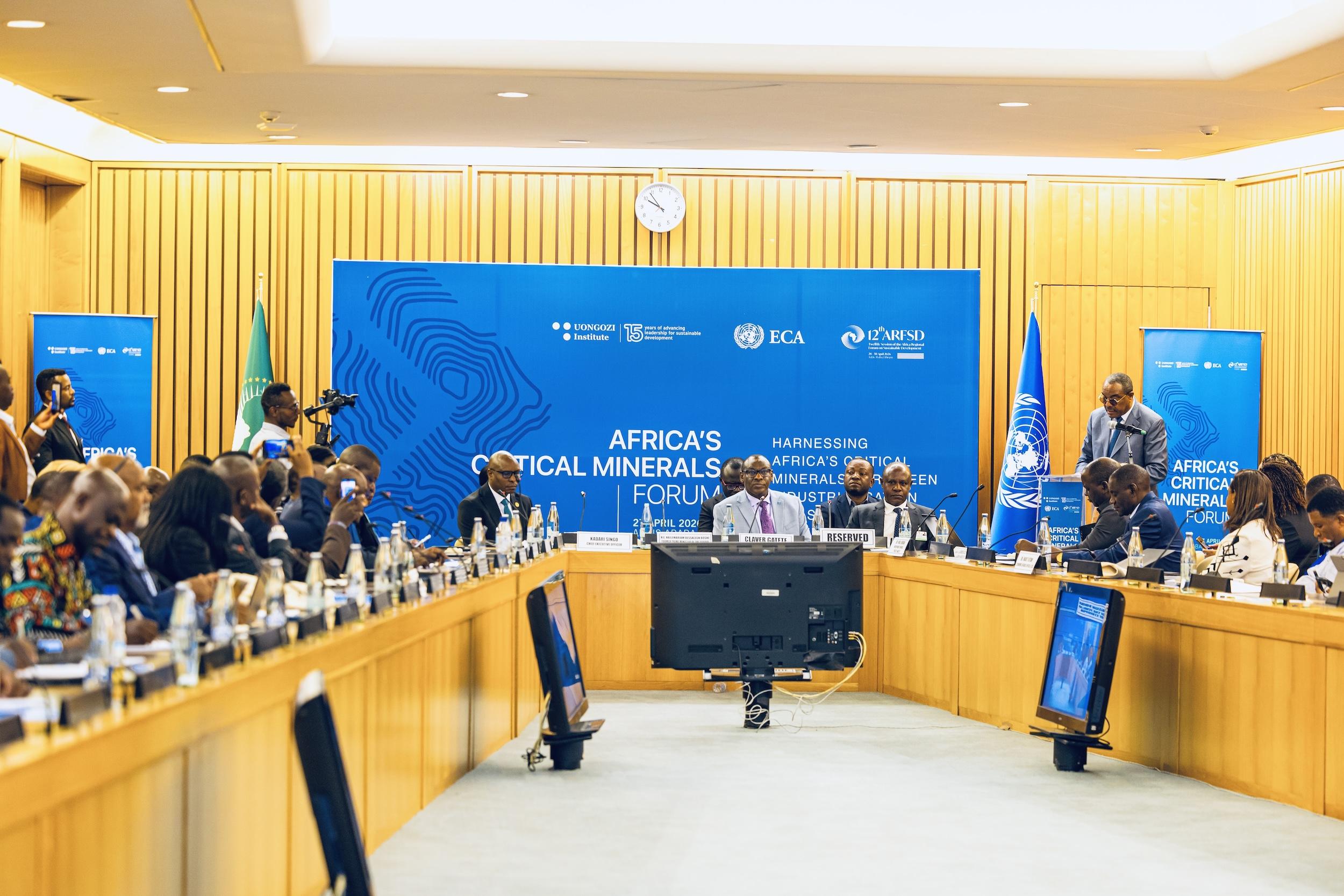
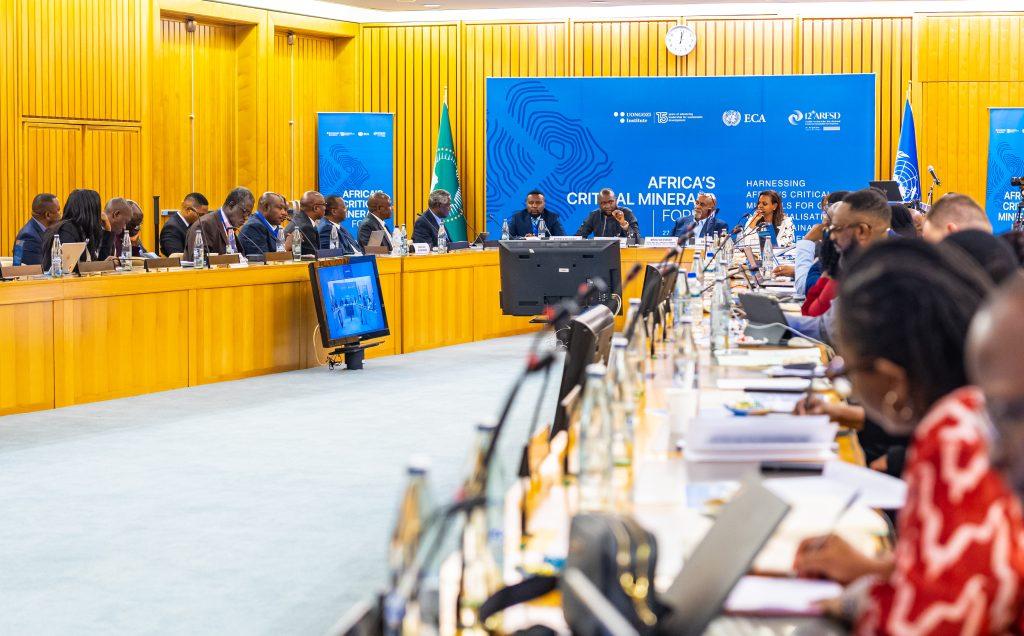
The central question is: Will Africa make this critical opportunity work for its citizens, the environment, and future generations? To promote an open dialogue around this question, UONGOZI Institute in collaboration with the United Nations Economic Commission for Africa (UNECA) convened Africa’s Critical Minerals Forum on 27 April 2026 in Addis Ababa, Ethiopia.
The event, themed “Harnessing Africa’s critical minerals for green industrialisation and sustainable development,” was officiated by H.E. Hailemariam Dessalegn Boshe, former Prime Minister of the Federal Democratic Republic of Ethiopia.
The delegates of the forum included Mr. Claver Gatete, United Nations Under-Secretary-General and Executive Secretary of UNECA; Mr. Msafiri Mbibo, Deputy Permanent Secretary for the Ministry of Minerals in Tanzania; Mr. Kadari Singo, Chief Executive Officer of UONGOZI Institute; and other distinguished leaders in government, business, academia, and civil society from all parts of the continent.
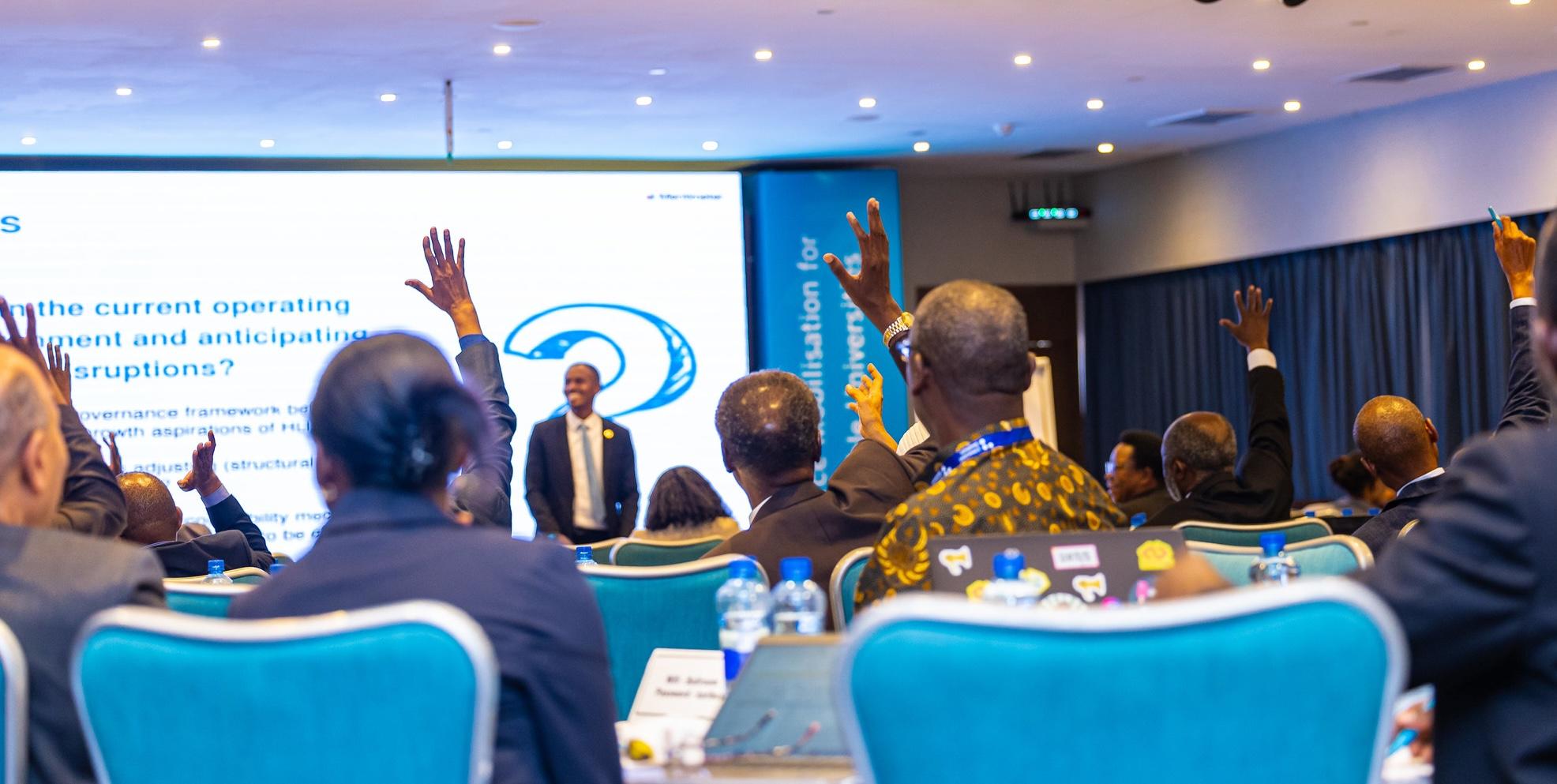
The forum featured an opening session followed by expert presentations, panel discussions, and a spotlight session to amplify the perspectives of youth, women, and local communities on the topic. The keynote presentation on “Africa’s critical minerals in the global green transition: From extraction to green development”was delivered by Dr. Paul Jourdan, an Independent Mineral Policy Analyst. The expert presentations covered: (i) Africa’s Green Mineral Strategy: Implementation and development outcomes, (ii) Pathways to beneficiation and regional value chains in critical minerals, and (iii) Global geopolitical dynamics of critical minerals. The presenters were, respectively, Dr. Marit Kitaw, Economic Affairs Officer, UNECA; Mr. Vusi Mabena, Executive Secretary, Mining Association of Southern Africa; and Dr. Kojo Busia, Director, Green Africa Minerals Ltd.
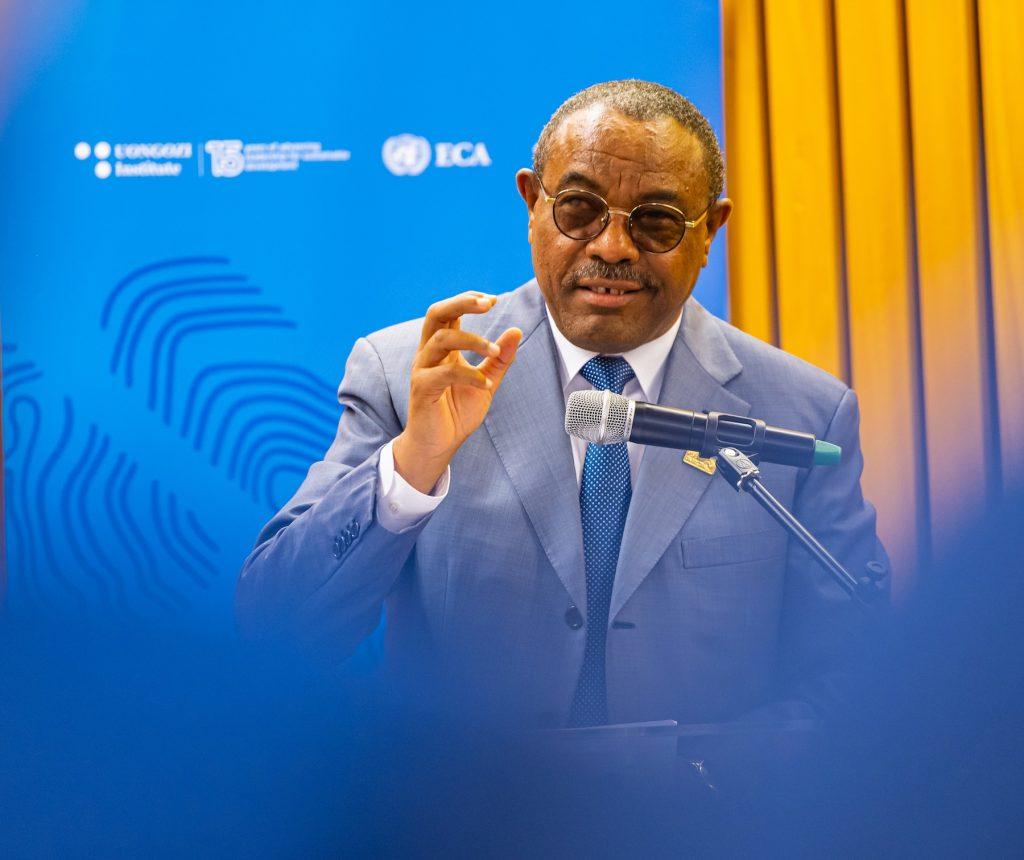
During his speech, H.E. Boshe emphasised the need to move beyond the bottom of the value chain. He said that the goal is to ensure that Africa’s minerals form the backbone of a domestic industrial revival, adding:
“We must transition from exporting raw ore to establishing mineral refining and processing plants, battery precursor and assembly facilities, and green steel and aluminum industries.”
He considered the power of instruments such as the African Continental Free Trade Area (AfCFTA), asserting that:
“Africa must act as a single unified bloc… if we compete individually, we weaken ourselves; if we cooperate, we become a global industrial force.”
He said that regional integration is essential because no single country can efficiently build full value chains for complex products such as batteries.
Mr. Gatete agreed with the former prime minister that frameworks like AfCFTA are crucial for the continent to secure a more equitable share of the global economic gains derived from the critical minerals it produces. He added that Africa’s policy direction is guided by the Africa Mining Vision and the African Green Minerals Strategy, which prioritise value addition, industrialisation and inclusive development.
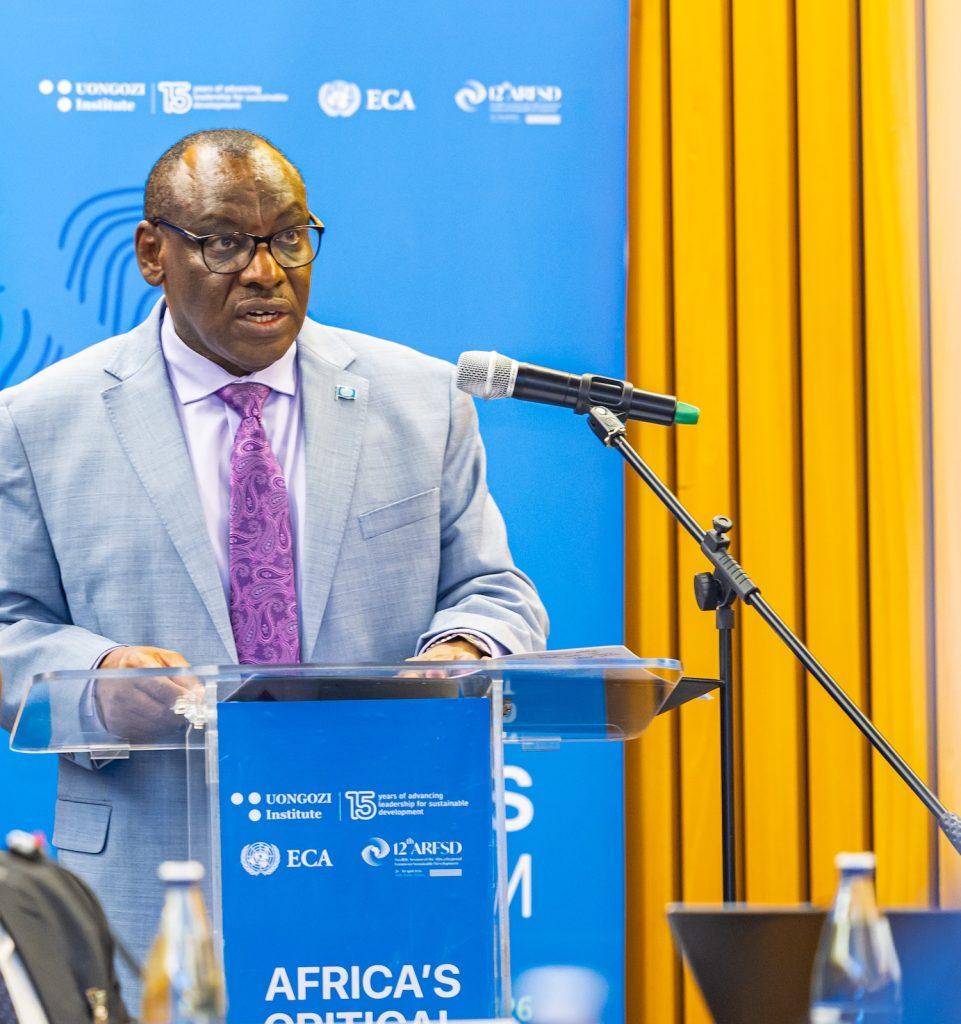
On his part, Mr. Singo said that Africa’s critical minerals should be viewed through the lens of development, rather than mining alone. This is because their efficiency depends on a wider ecosystem of other sectors, including education, water, infrastructure, energy, finance, and technology.
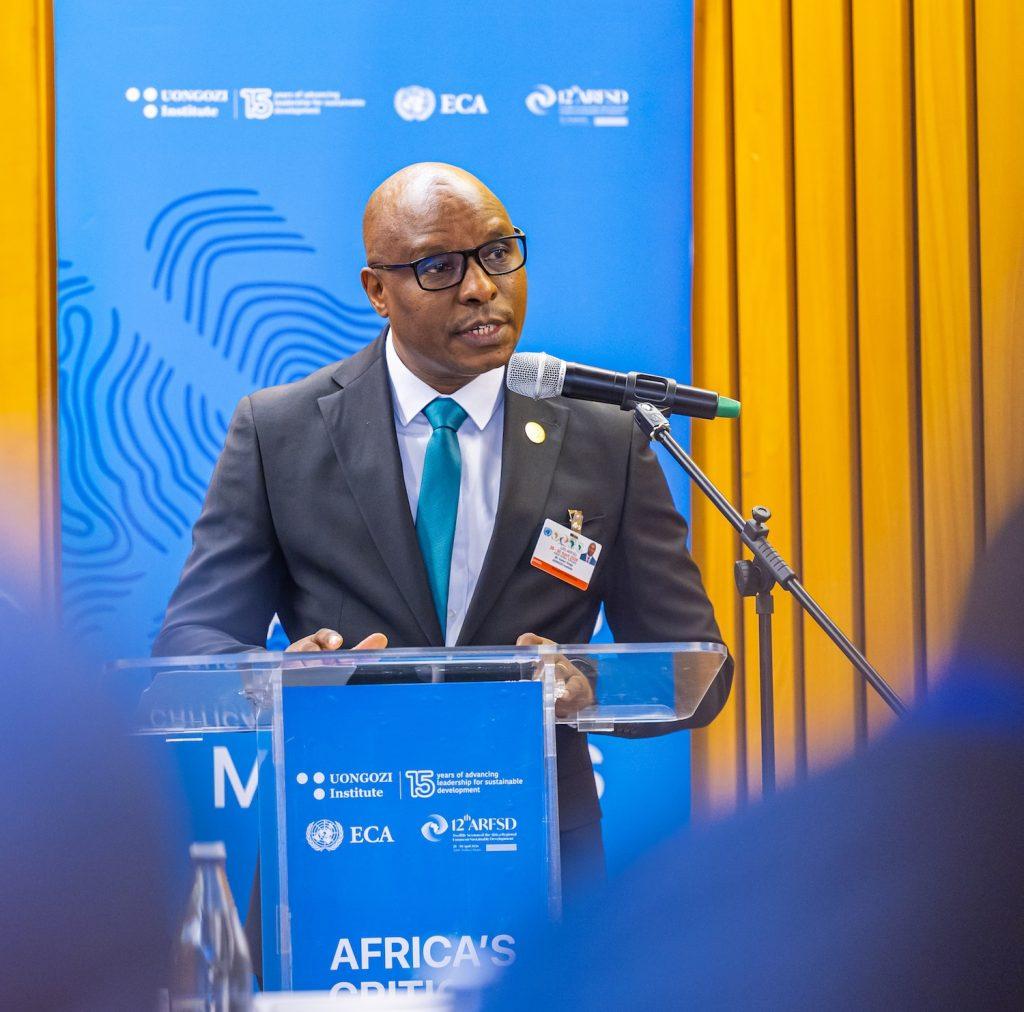
Africa’s Critical Minerals Forum was organised as a high-level event preceding the UNECA’s 12th Africa Regional Forum on Sustainable Development, which was held from 28 – 30 April 2026 in Addis Ababa.
Download the Statement of the forum here.
Download the event programme here.
Check out our latest research publication on critical minerals: Click here.
Follow the online conversation: #AfriCMF2026 #ARFSD12
[1] International Energy Agency (2024). World Energy Outlook 2024. https://iea.blob.core.windows.net/assets/140a0470-5b90-4922-a0e9-838b3ac6918c/WorldEnergyOutlook2024.pdf
[2] World Bank. (2023). Securing Africa’s Critical Minerals for the Energy Transition.
[3] African Union. (2025). African Green Minerals Strategy. https://au.int/sites/default/files/documents/44539-doc-AGMS_Final_doc.pdf